
Rob Culpepper: Tell me who you are, where you're from, and what kind of work you do.
Sally Montana: My name is Sally Montana. That is my artist name rather than my legal name. I grew up in Germany and studied photography in Switzerland. I also spent a year living in South Africa. I moved to the United States thirteen years ago and spent ten years in New York. For the last two and a half years I have been based in Los Angeles full time.
I won the green card lottery in 2011 and moved to the United States on my own in early 2013. I did not know anyone here. The only contact I had was a photographer from Switzerland who was living in New York at the time, so I reached out to him and started building from that Swiss connection.
 Sally: I have always had a strong work ethic and a good technical understanding of lighting, and I am 6 feet tall and can handle heavy gear. That helped me establish myself pretty quickly as a really solid photo assistant, which is how I got through my first couple of years here.
At first, the photographer I worked with was mostly doing editorial work, and the projects were really beautiful. One of the first big assignments I assisted on was a TIME Magazine piece for the fiftieth anniversary of the March on Washington. We met some of the Freedom Riders, including the late Congressman John Lewis, and it was hugely impactful for me. As he started getting more and more entertainment projects over the next three to four years, that was how I grew into that world too. I eventually became his first assistant, so I was on all the pre‑production calls and in the meetings. I had visibility on set, and clients and agencies knew me. People began asking, “Do you also shoot?” so in 2019 I started showing my book.
I got my first key art shoot in December 2019, which was exciting, although the release was ultimately delayed because of the pandemic. In 2021 the work really picked up for me, and I used the pandemic as a chance to step away from assisting and focus on my own projects. I found an agent and began shooting key art under my own name, and I realized how much I loved that work.
 Rob: Tell me about how you balance the entertainment work with your personal projects.
Sally: People always ask me where my interest really is and what I want to do long term. In the studio I am very technical, and I love thinking about lighting, setting it up, and fine‑tuning it. But I also love being out in nature, meeting new people, listening to their stories, building trust, and working in niche environments. For me, balancing the entertainment work with personal projects means moving between those two sides. The studio work gives me a space to focus on lighting and craft, and my personal projects keep me connected to real people and documentary‑style storytelling.
In 2011, before I moved to the United States, I spent six months driving across the country. I visited thirty‑seven states and met people who were surprisingly open and welcoming. As a tall white woman with a European accent, I noticed that people trusted me quickly and wanted to hear my story. More than once I was invited into someone’s home and offered a place to stay after only thirty minutes of conversation.
I love getting my feet in the dirt and really experiencing Americana, which is how the rodeo project came about for me. It is all about balance.
There is studio life on one side, which is clean and glitzy, and then there is being out in the dust with just my camera and nobody else. I enjoy that challenge.
 Rob: Tell me a little bit about your rodeo project. How did it come about?
Sally: I was in the running for a key art shoot on a show about cowboys, and I did not land it. I was frustrated because I really wanted that job. A friend said to me, “Go get your feet in the dirt. Go photograph a rodeo as a personal project.” That comment stuck with me, and I started researching rodeos.
I found a rodeo that was starting the very next day just outside Las Vegas. I have a big Ford Expedition with a second‑floor bed platform built in, so I loaded up my gear and was on the road two hours later. I spent four days at that rodeo. That trip was my introduction to the rodeo world.
I bought tickets, but when I arrived I found myself loitering at the back gate where the cowboys come in, wondering how to approach it. An older gentleman walked up to me and said, “Hi, I am John Growney.” I replied, “Hi, I am Sally Montana.” That name helps a lot; people respond to it. He said, “Sally Montana, are you famous? Do we know each other?” and I answered, “I can guarantee you I am not.”
 Sally: He was in his seventies, but he had a real sparkle in his eyes and he asked me, “What are you here to do? What do you want to do?” I said, “I have my canvas, I want to photograph cowboys.” He replied, “Go put up your canvas right there, girl.” Then he started wrangling cowboys for me. He called out, “Yo, Dwight, come here, get your photo taken, stand in front of the canvas. Yo, Cody. Yo, Jet.” They have all these names, you know.
We started talking about me being German, and he told me about his father and a performer named Sally Rand, who did the fan dance at the 1933 Expo. His dad had been in awe of her. Then he started singing Bobby Helms’ song “Fräulein,” and it was just so funny. Within an hour he handed me his all‑access pass and said, “I have to go to the arena. You do your thing. Here you go.”
From there it kind of snowballed.
 Sally: My digital tech here in Los Angeles has a house up near Lake Tahoe, and he told me, “You should come to Bridgeport. We have a ranch rodeo in the summer. If you are into rodeo, you really need to see that.” There are so many kinds of rodeo, and ranch rodeos have a very different feel from PRCA events, which are part of the Professional Rodeo Cowboys Association.
Two months later I went up to Bridgeport and photographed the ranch rodeo. It is a small town, and my digital tech knew everyone there, so once again I had an all‑access pass and could go wherever I wanted.
Rob: That's incredible. I was so curious how you got access and earned everyone’s trust. It sounds like that’s just you.
Sally: I have a bit of a theory about what people are good at. I grew up in a household that was not very stable, and that made me pay close attention to people early on. I learned to read body language and energy quickly. On set or at a rodeo, I tend to respond to people in a way that makes them feel seen and comfortable, and that seems to build trust. It is something I do naturally, and it has become a real strength in my work.
 Rob: Tell me a little bit more about your production process. You mentioned you brought a backdrop, and I can see in some grip in the picture. Were you working alone? Did you have an assistant?
Sally: I have a few different ways of working depending on the kind of shoot. For other personal projects I will sometimes bring an assistant. For the rodeo projects it is always just me. I sleep in my truck and travel light. I bring my camera, and at first I also packed flash just in case, but I quickly realized I could not use it out there.
For my first rodeo I set up a canvas backdrop held by two light stands and a crossbar, with some grip to secure it against the wind. The backdrop was about five feet wide.
I wanted more space to the left and right because I was interested in more full‑body portraits. For the ranch rodeo I was able to park my truck closer. I have roof rack rails on the truck, and I built a rig with two magic arms and a crossbar that held a ten‑by‑twenty‑four‑foot muslin backdrop draped off the side. I parked so that the sun was behind the setup and the portraits were in open shade. I love McGyvering things.
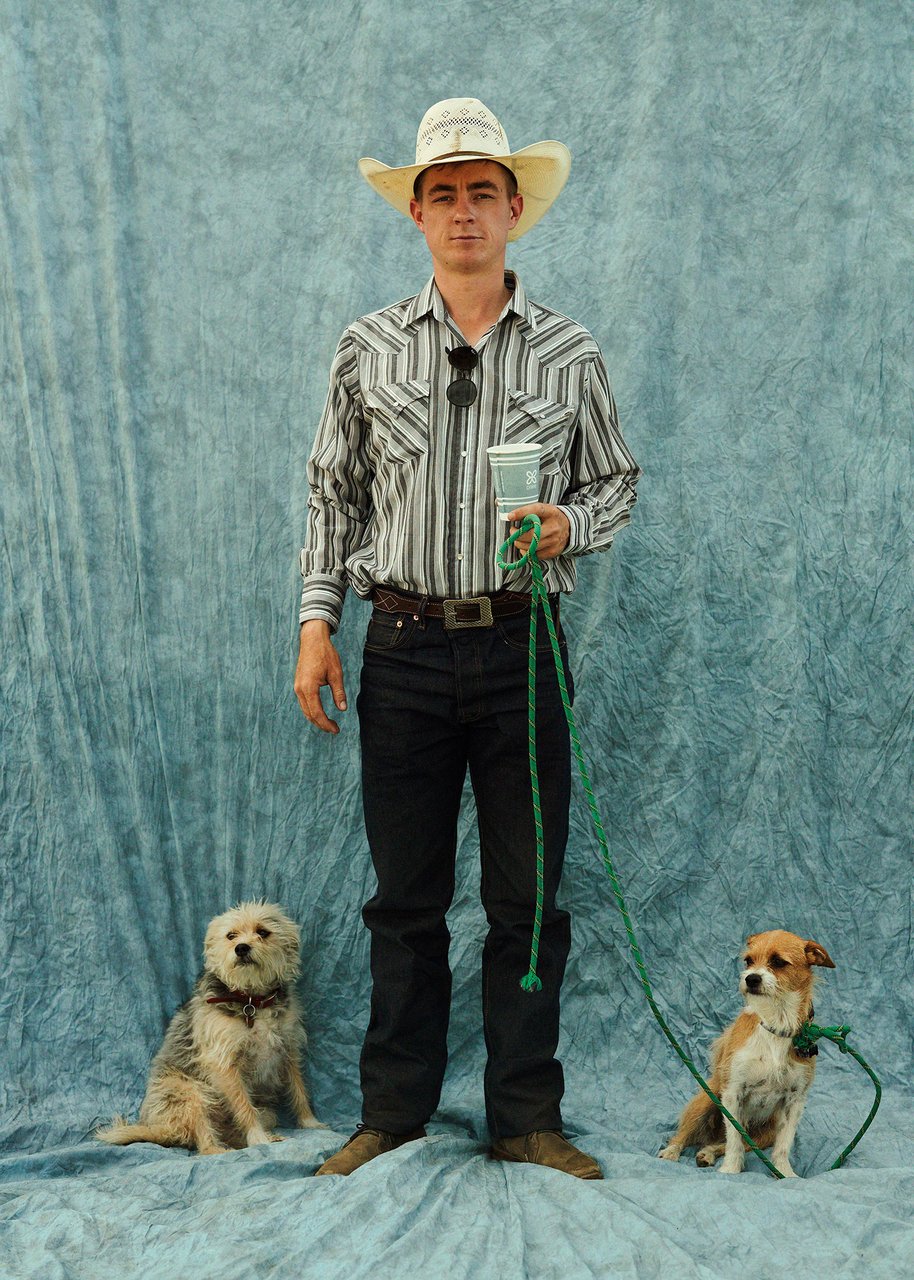
 Sally: Then I would just walk around the grounds with my camera. I usually wore a harness with two cameras and two different lenses, a 16–35 on one body and another lens on the other. I used a 50mm prime for the portraits. I tried a 70–200 at some point, but I quickly saw that the 16–35 was where it was at. It was the most dynamic and fit the environment and the pace of things best.
Rob: Did you go into the project thinking, “I just want this to be simple, I want a pure experience with photography”? Because in some ways that's what it sounds like. You removed all the other decisions, and it became about you and the subject.
Sally: I think it is a mix of intuition and years of experience. I did my first internship in Germany in 1997, so I am twenty‑nine years into this work now. At this point light is so ingrained in me that it feels automatic. I do not have to think about it in a technical way, which lets the project become about the relationship between me and the subject.
The 50mm prime is an f1.2, and when you are that close to people you want that beautiful fall‑off. You want that wide‑open f‑stop. That was the thinking behind it. I had this beautiful lens that I had not owned for very long, and I wanted to really use it.
 Sally: A lot of these people are not used to being in front of a camera, which is what happens often when you are not in the studio. It is really interesting to see how they react when you use a prime lens and move in and out, sometimes a bit too close for comfort. How does their gaze change? Are they squinting?
Being a woman photographer often works in my favor. I tend to be happy and smile behind the camera, and people respond to that. In fact, when I photographed Lee Ritenour he pointed out how I smile behind the camera and how affirming that was. Some feel a bit charmed by it, and it gives them a kind of confirmation or confidence. It is very cool to see how they open up in front of the lens.
 Rob: In the candid pictures, the images are not heroic in the way that I typically think about cowboys at a rodeo. I feel like the heroism comes from the people and the way you've framed them, more so than from the action. Does that make sense?
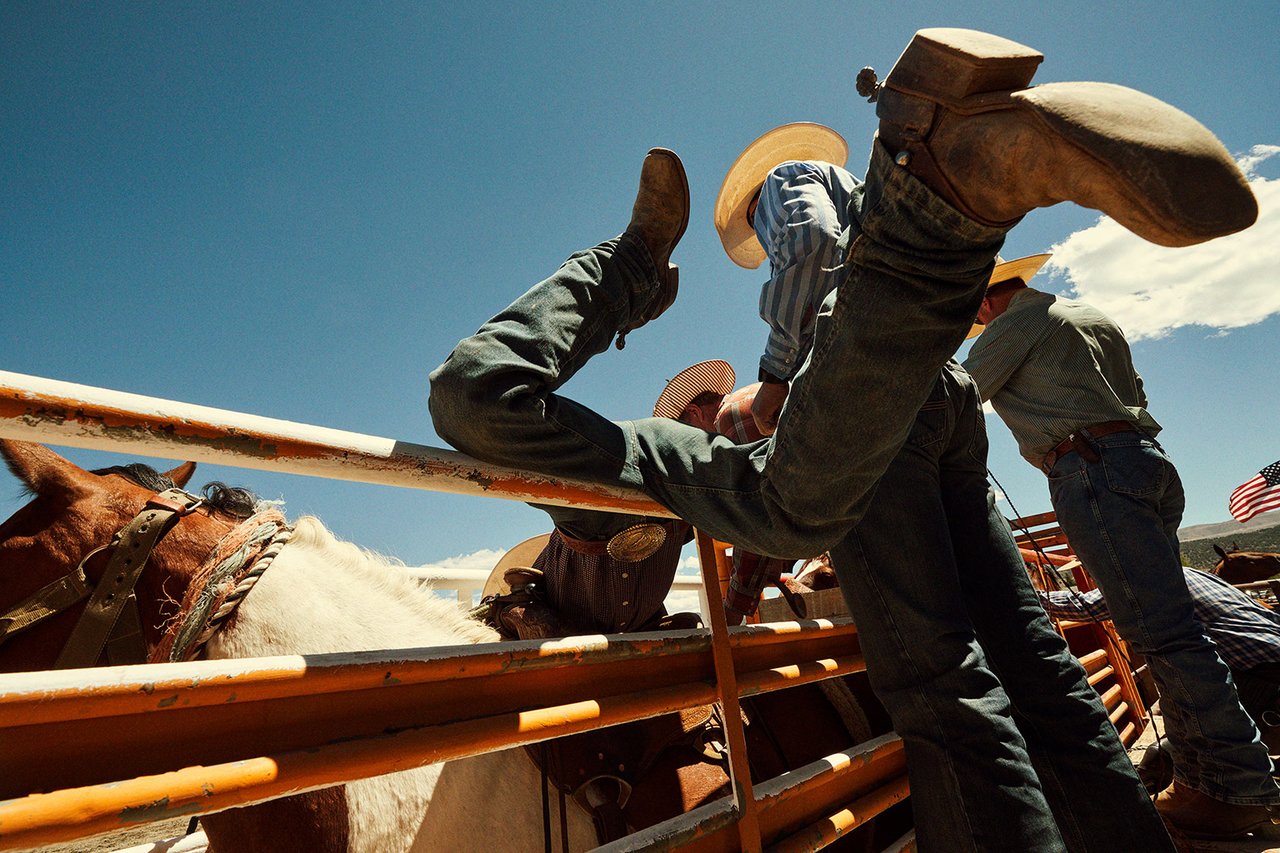
Sally: I hear what you are saying, and I think that connects directly to my intention going into the project. Everyone has seen the classic images of the rider on the bucking horse or the rider on the bull. The question for me was how to distinguish my work from that. Where is the story that people do not already know?
That is why I wanted to photograph what happens behind the scenes, because most people never see that. It is not just for my European friends who are unfamiliar with the rodeo world. It is also for many Americans. The reaction I hear again and again is, “It is really interesting to see what happens behind what you see from the stands and on TV.”
 Sally: For me it was really about the camaraderie behind the scenes. Everybody is there for each other. I also love how they talk about the animals and call them “animal athletes.” The animals are as much a part of it as the riders. There is such a strong sense of community there.
Rob: Do you have a favorite story or person from this series that you want to share?
Sally: I have a strong connection with John Growney. We still text to this day. One year I did not return to the rodeo where we first met, and he messaged me, “I missed you. Where were you?” And when I walked onto the rodeo grounds this year, wearing a cowboy hat with my cameras on a harness, I heard a familiar voice call out, “Sally Mooontana,” across the dusty parking lot. Johnny G had spotted me before I saw him. That kind of ongoing relationship is a good example of how the project has grown into something more than just pictures.
Rob: Yeah, that connection seems so important. Without him—or without that initial moment where you met—it probably would have been a very different project.
Sally: Very much so. Everybody knows him in the rodeo world, so when he introduces you to someone, the doors open.
 Rob: My final question is always: what is exciting to you about photography right now?
Sally: As soon as I bring the camera up to my face, I am on autopilot in my happy place.
The photography world is shifting a lot and has been for the last few years. Entertainment is not an easy space to work in right now, but I think there will always be room for artists and for real artistry. I do not want to do anything else. I know I am good at what I do, and I will always find a way to stay with it.
One thing I am really excited about is my current personal project. It is about a synchronized swim team here in Los Angeles called the Black Swans. They are the first, and I believe the only, all‑Black women’s synchronized swim team, and they have worked with Beyoncé. I have had one outing with them so far, and I have mood boards that will probably take another four, five, or six sessions to explore. Again, it is a very niche world.
It is about the people, the visuals, and doing something new.
See more of Sally's work
https://www.sallymontana.com
https://daybreakdirectory.com/photographers/sally-montana
Tags
Comments (0)
No comments yet.
Sign in to join the conversation.